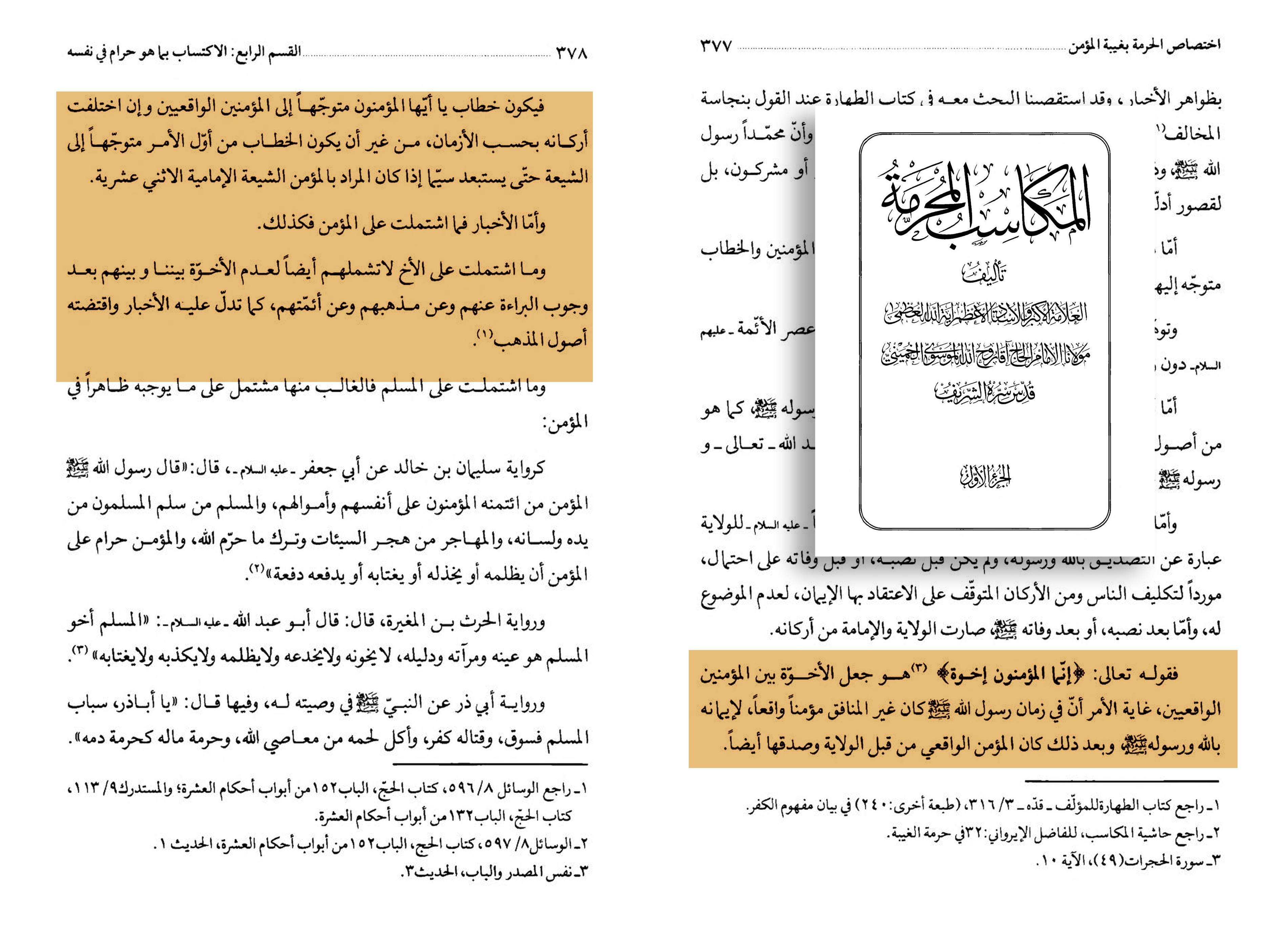
Imam Roohullah Khomeini in Al-Makasib Al-Moharramah, Vol 1, Page 377-378 says:
فقوله تعالى: (إنما المؤمنون إخوة) (۳) هو جعل الأخوة بين المؤمنين الواقعيين، غاية الأمر أن في زمان رسول الله ﷺ كان غير المنافق مؤمناً واقعاً، لإيمانه بالله ورسوله وبعد ذلك كان المؤمن الواقعي من قبل الولاية وصدقها أيضاً.
فيكون خطاب يا أيها المؤمنون متوجها إلى المؤمنين الواقعيين وإن اختلفت أركانه بحسب الأزمان، من غير أن يكون الخطاب من أول الأمر متوجهاً إلى الشيعة حتى يستبعد سيما إذا كان المراد بالمؤمن الشيعة الإمامية الاثني عشرية.
وأما الأخبار فما اشتملت على المؤمن فكذلك.
وما اشتملت على الأخ لا تشملهم أيضاً لعدم الأخوة بيننا وبينهم بعد وجوب البراءة عنهم وعن مذهبهم وعن أئمتهم، كما تدل عليه الأخبار واقتضته أصول المذهب ).
Translation:
Allah’s words “The believers are but brothers” (Qur’an 49:10) refers to true believers. During the time of the Prophet ﷺ, anyone who was not a hypocrite was considered a true believer because they had faith in Allah and His Messenger. But after that, true faith also required belief in and acceptance of wilayah (the divinely appointed leadership).
So when the Qur’an says “O you who believe”, the address is always directed to true believers, although the conditions of being a true believer have differed in different times. This means the verse was not originally directed only to the Shi‘a, which some might wrongly assume, especially if by “believer” one means specifically the Twelver Shi‘a.
As for the narrations: whenever they mention “the believer,” they mean the true believer as explained above. And whenever they speak about “brotherhood,” it does not apply to those outside, since there can be no brotherhood with them after the obligation of barā’ah (disassociation) from them, their beliefs, and their leaders. This is supported by narrations and is required by the principles of the madhhab.
 Alkarbala