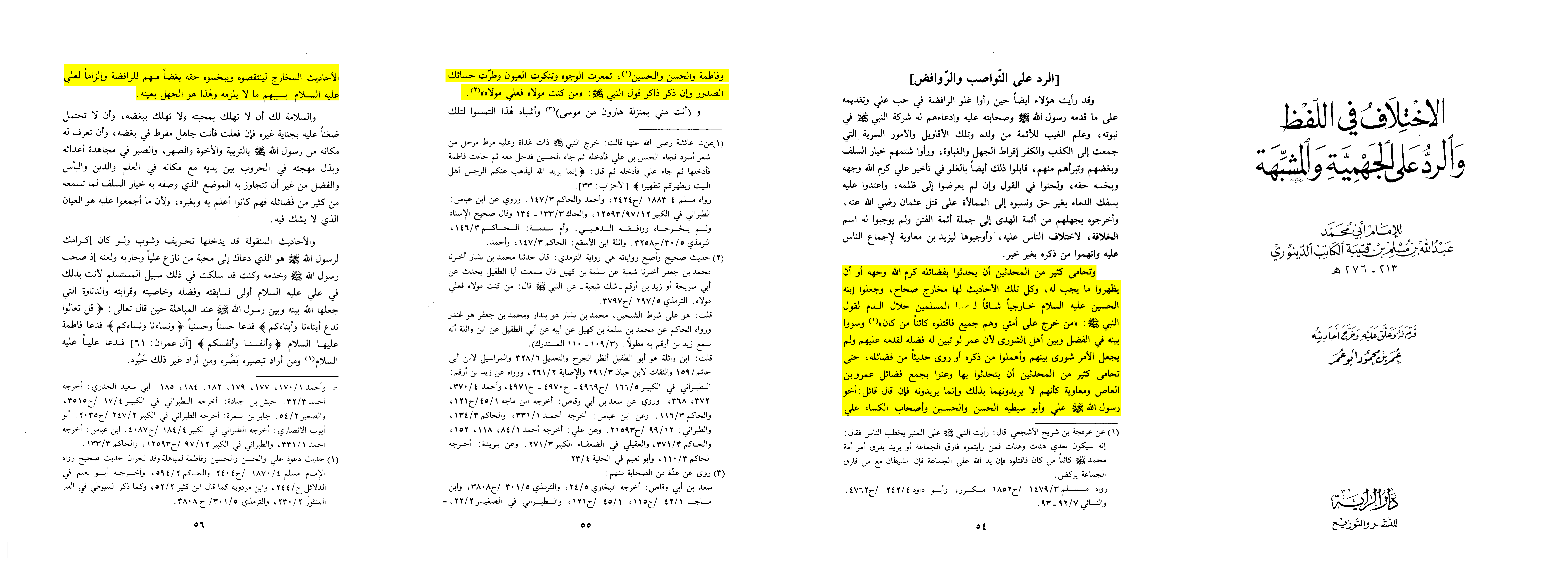
Basically an early sunni scholar saying they did not narrate merits of imam ali on purpose even if they knew the chain was sahih
Uploaded on: 2026-01-10 16:08:57
Credit: mujtaba ali

Sunnis beat up their Shiekh for narrating Haidth al-Tyr to them
Uploaded on: 2026-01-10 16:08:02
Credit: mujtaba ali

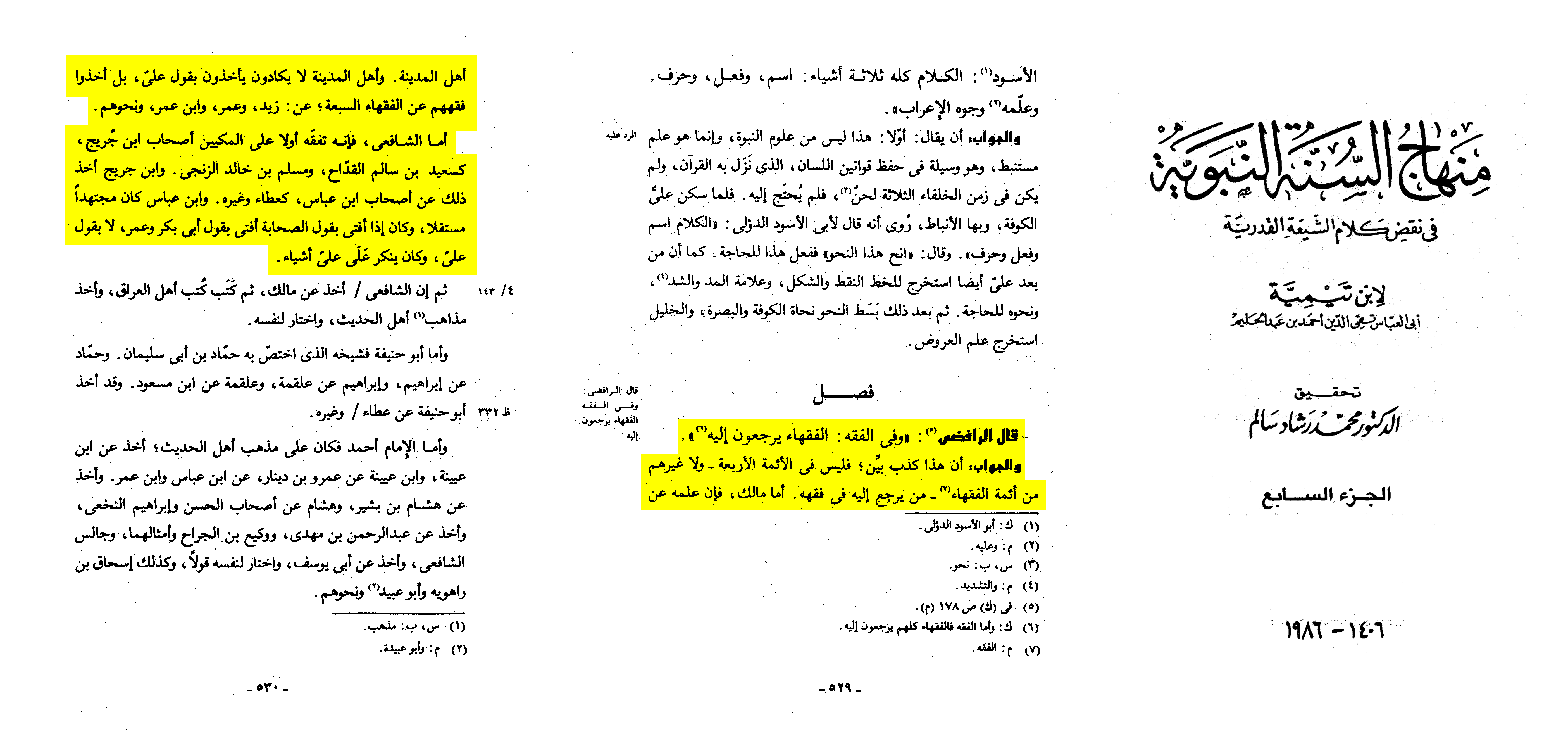
Ibn Taymiyya says in Minhaj al-Sunnah, Vol 7 pg. 529 – 530:
قال الرافض: ((وفي الفقه : الفقهاء يرجعون إليه)). والجواب: أن هذا كذب بين، فليس فى الأئمة الأربعة - ولا غيرهم من أئمة الفقهاء - من يرجع إليه فى فقهه. أما مالك، فإن علمه عن أهل المدينة. وأهل المدينة لا يكادون يأخذون
بقول على، بل أخذوا فقههم عن الفقهاء السبع، عن: زيد، عمر، وابن عمر، ونحوهم. أما الشافعي، فإنه تفقه أولا على المكيين أصحاب ابن جريج، كسعيد بن سالم القداح، ومسلم بن خالد الزنجي. وابن جريج أخذ ذلك عن أصحاب ابن عباس كعطاء وغيره. وابن عباس كان مجتهداً مستقلا، وكان إذا أفتى بقول الصحابة أفتى بقول أبي بكر وعمر، لا بقول على، وكان ينكر عَلَى على أشياء.
None of the four imams nor the other of the jurists refer to him (Ali) in their jurisprudence. Verily if Malik’s knowledge was obtained from the people of Madina, the people of Madina did not take Ali’s statements. They took their jurisprudence from the seven jurists, Zaid, Umar, ibn Umar and so on.
Shafiyee obtained jurisprudence from the people of Makka, the companions of Ibn Juraij like Saeed bin Salem al-Qadah and Muslim bin khalid al-Zenji. Ibn Juraij obtained knowledge from the companions of Ibn Abbas, like Atta and others. Verily Ibn Abbas was an independent mujtahid. Whenever he gives fatwa, according to the Sahabas, he would give the fatwa of Abu Bakr and Umar, not Ali’s. He disagreed with Ali on few things.
Uploaded on: 2026-01-10 16:07:11
Credit: mujtaba ali

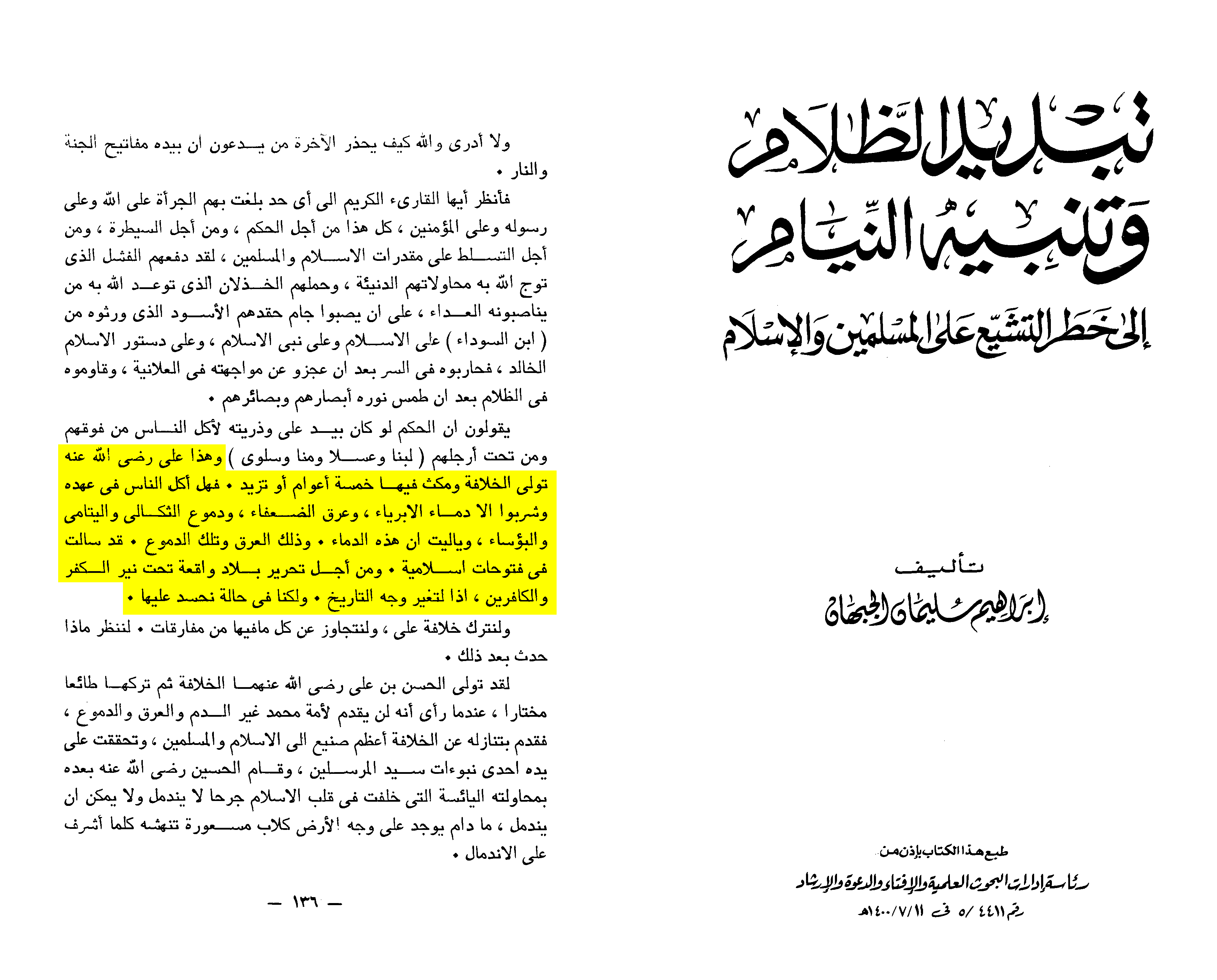
The nasibi historian Ibrahim al-Jabhani shamelessly says in his book Tabdid al-Dhalam, page 136:
وهذا على رضى الله عنه تولى الخلافة ومكث فيها خمسة أعوام أو تزيد . فهل أكل الناس في عهده وشربوا الا دماء الابرياء ، وعرق الضعفاء ، ودموع الثكالي واليتامى و البؤساء ، وياليت ان هذه الدماء . وذلك العرق وتلك الدموع . قد سالت في فتوحات اسلامية . ومن أجل تحرير بلاد واقعة تحت نير الكفر والكافرين ، اذا لتغير وجه التاريخ . ولكنا في حالة نحسد عليها.
And this is ʿAlī, may Allah be pleased with him, who assumed the caliphate and remained in it for five years or more. But did the people in his time eat and drink anything but the blood of the innocent, the sweat of the weak, and the tears of the bereaved, the orphans, and the miserable? If only this blood, that sweat, and those tears had been shed in Islamic conquests or for the liberation of lands under the yoke of disbelief and disbelievers, then the face of history would have changed. But we are in a situation we envy.
Uploaded on: 2026-01-10 16:05:21
Credit: mujtaba ali

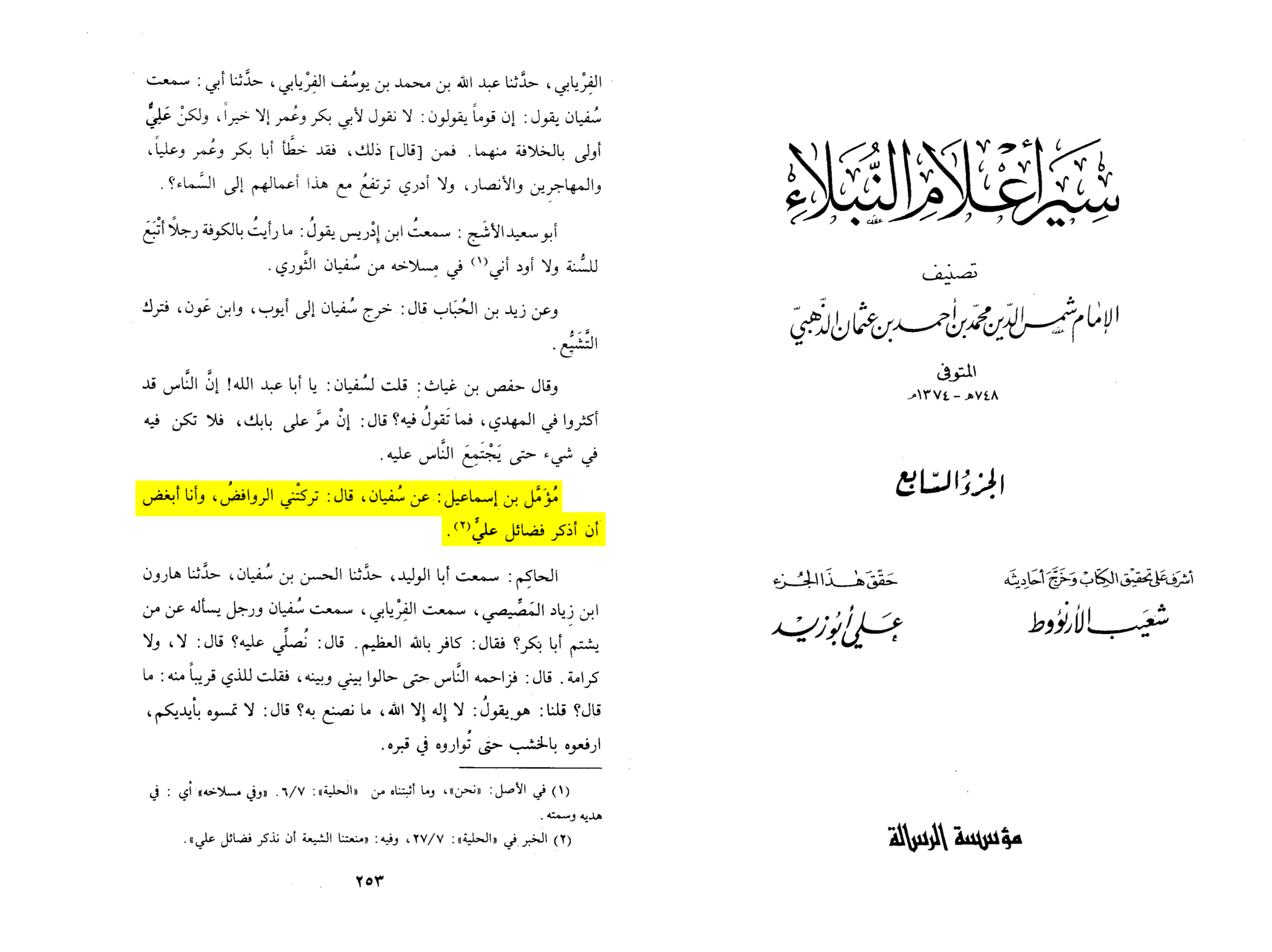
Siyar A'lam an-Nubala, by al-Dhahabi, Vol. 7, pg. 253:
تَرَكَتْنِي الرَّوَافِضُ وَأَنَا أَبغُضُ أَنْ أَذْكُرَ فَضَائِلَ عَلِيٍّ
Sufyan al-Thawri says: 'I hate mentioning the virtues of Ali (a)'
Uploaded on: 2026-01-10 16:04:22
Credit: mujtaba ali

Narrating a virtue of Imam Ali (as) makes you najis!
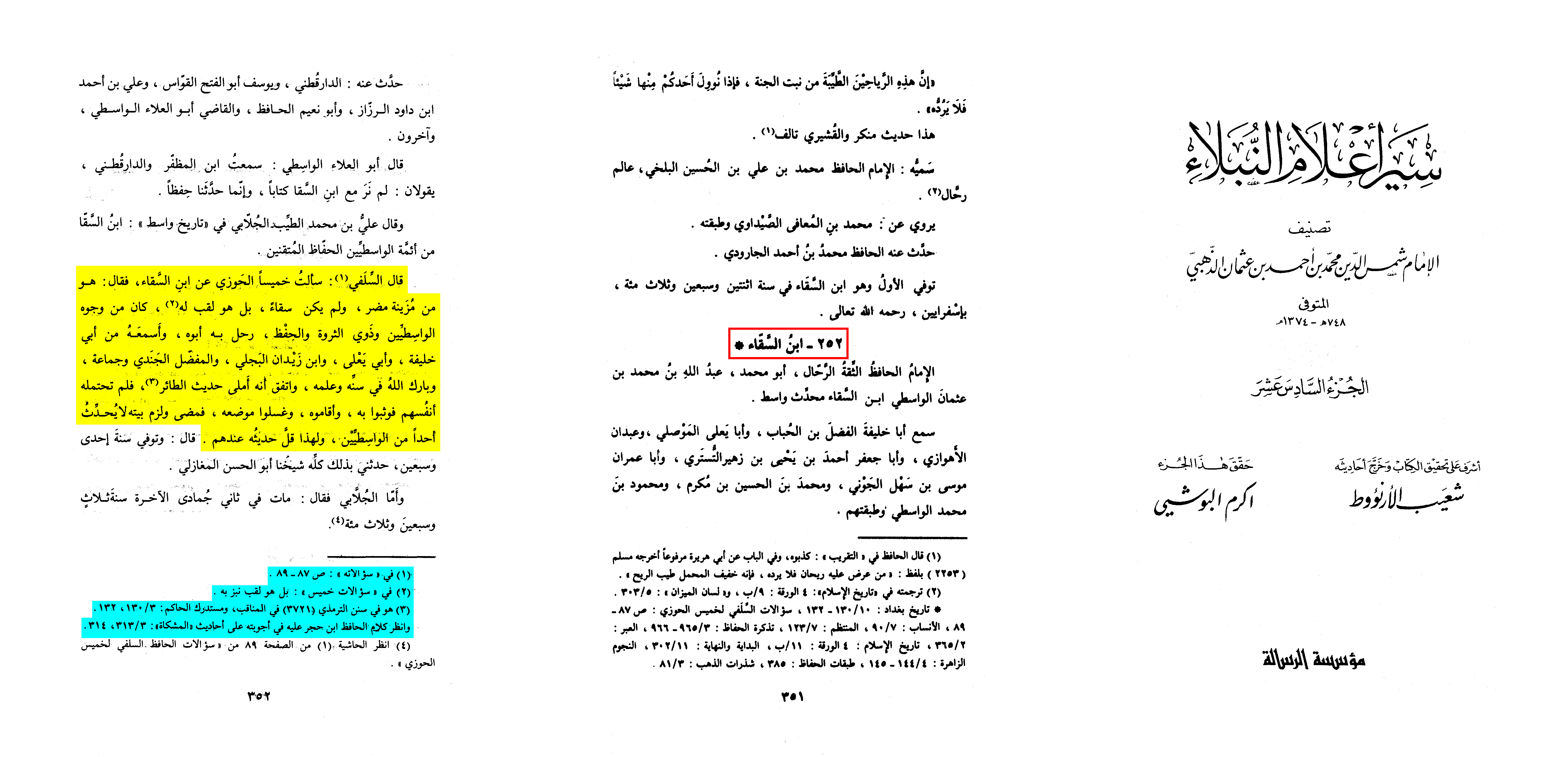
In Siyar A'lam al-Nubala, Vol. 16, Pages 351-352, adh-Dhahabi tells an incident that happend with the Sunni scholar Ibn al-Saqqa:
قال السلفي (1): سألت خميسا الحوزي عن ابن السقاء، فقال: هو من مزينة مضر، ولم يكن سقاء، بل هو لقب له (2)، كان من وجوه الواسطيين وذوي الثروة والحفظ، رحل به أبوه، وأسمعه من أبي خليفة، وأبي يعلى، وابن زيدان البجلي، والمفضل الجندي وجماعة، وبارك الله في سنه وعلمه، واتفق أنه أملى حديث الطائر (3)، فلم تحتمله أنفسهم فوثبوا به، وأقاموه، وغسلوا موضعه، فمضى ولزم بيته لا يحدث أحدا من الواسطيين، ولهذا قل حديثه عندهم.
I asked Khamees al-Jawzi about Ibn al-Saqqa. He said: He is from the Muzayna tribe of Mudar and was not actually a water carrier, but this was a title given to him. He was one of the prominent people of Wasit, wealthy and knowledgeable. His father took him on journeys where he heard from Abu Khalifa, Abu Ya'la, and others. He was blessed with a long life and knowledge. It happened that he narrated Hadith al-Tayr, which was not well received, so they attacked him, removed him from his place, and cleaned the area where he had been sitting. He then withdrew and stayed at home, not narrating to anyone from Wasit. This is why his hadiths are few among them.
Uploaded on: 2026-01-10 16:03:45
Credit: mujtaba ali

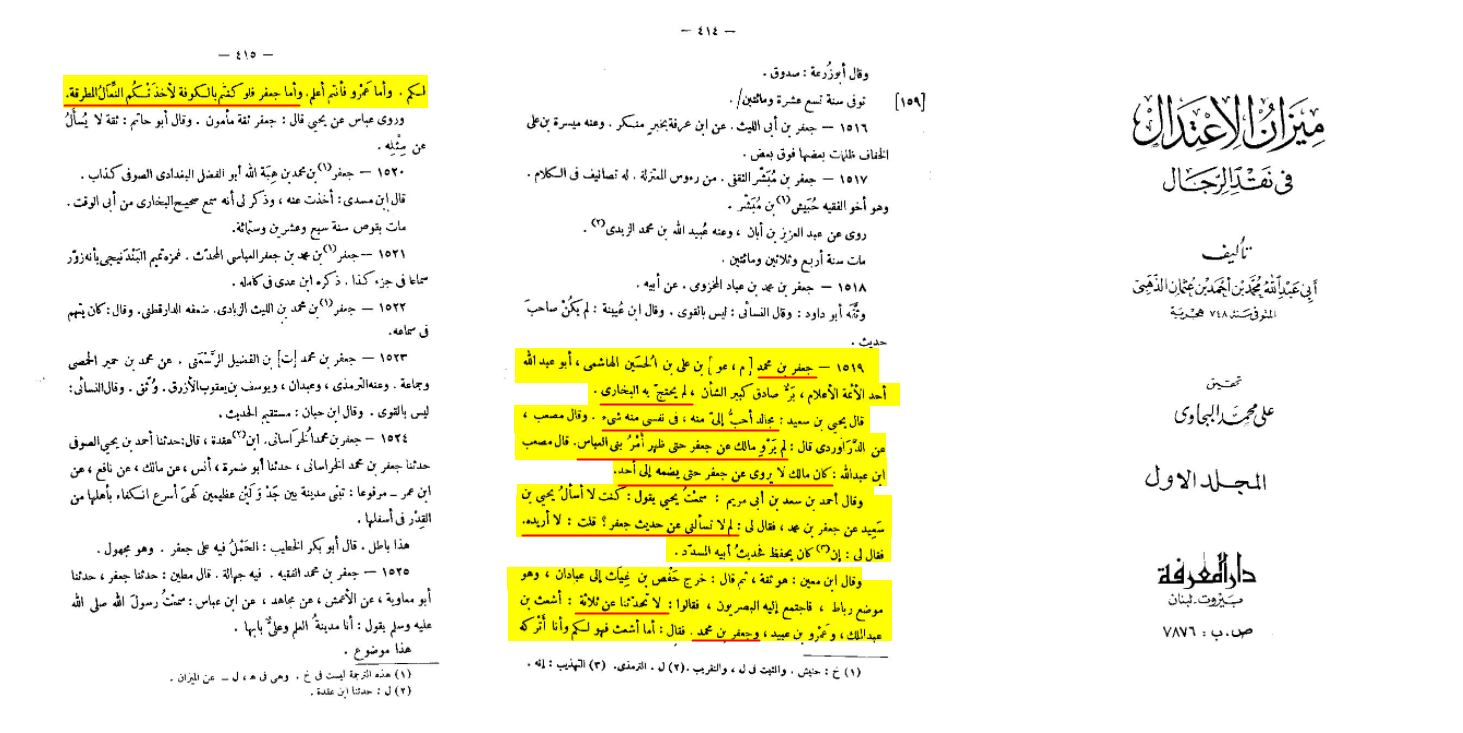
Imam al-Sadiq in Mizan al-I'tidal,
"Bukhari did not use his hadith as Hujjah.
Yahya Ibn Sa'eed said: Mujalid is more beloved to me than him. And my nafs has something against him.
And Mus'ab said, Al-Darawardi said: Malik [Ibn Anas] didn't narrate from Ja'far until the Abbasids took control.
And Mus'ab Ibn Abdullah said:Malik didn't narrate from Ja'far until he narrated from someone with him.
And Ahmed Ibn Sa'd Ibn Abi Maryam said, I heard Yahya say: I wouldn't ask Yahya Ibn Sa'eed about Ja'far Ibn Muhammad.** So he said to me, 'Why don't you ask me about the hadith of Ja'far?' So I said, I don't want it.
And Ibn Ma'een said: He is Thiqah.
Then he said: Hafs Ibn Ghiyath went out once to Abadaan so the Basraiyun came to him and said, 'Do not narrate to us from 3, Ash'ath Ibn Abd al-Malik, Amr Ibn Ubayd, and Ja'far Ibn Muhammad.' So he [Hafs] said, 'As for Ash'ath, he is yours and I leave him for you all. As for Amr, you are more knowledgeable. As for Ja'far, If you were in Kufa,I would rather take from hammered slippers.
Mizan al-I'tidal, Vol.1, Page 414-415
Uploaded on: 2026-01-10 16:02:52
Credit: mujtaba ali

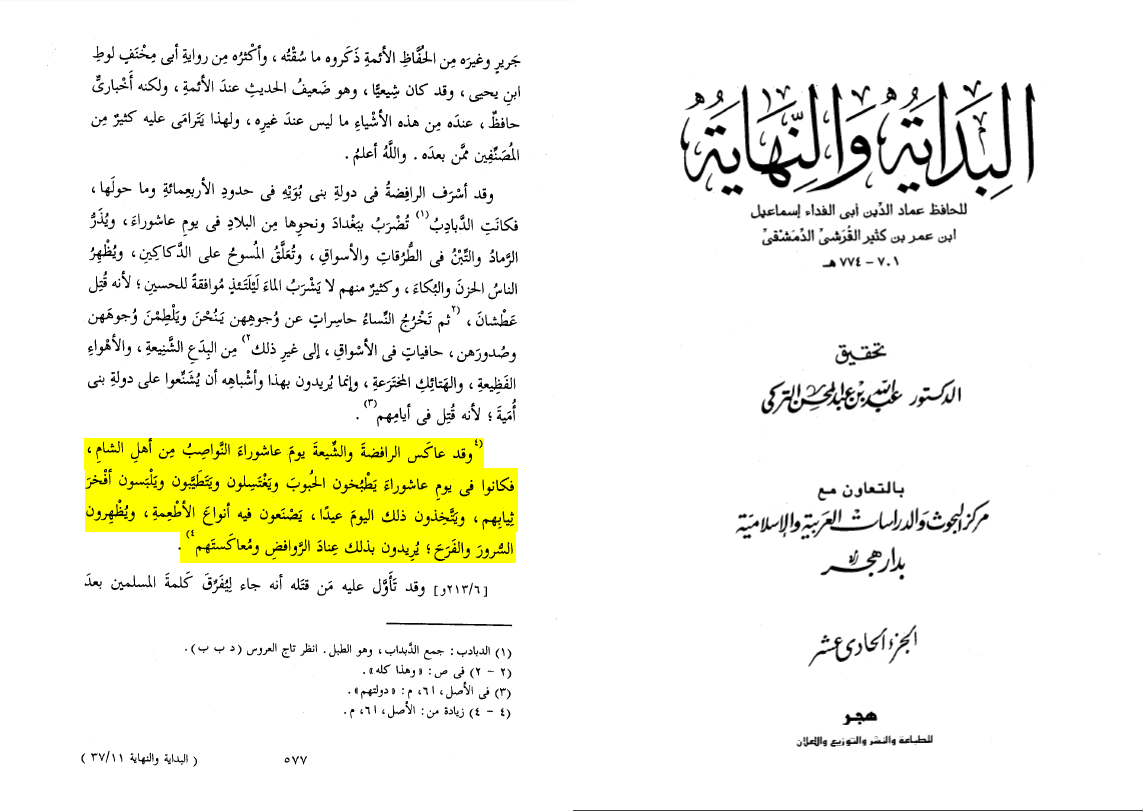
وقد عاكس الرافضة والشيعة يوم عاشوراء النواصب من أهل الشام، فكانوا إلى يوم عاشوراء يطبخون الحبوب ويغتسلون ويتطيبون ويلبسون أفخر ثيابهم ويتخذون ذلك اليوم عيدا
“The Nawasib of Syria used to contradict the Rafidha and Shia on the day of Ashura, they (Nawasib) used to bake, bath, use perfumes, wearing their best clothes and consider that day as feast”.
Al-Bidayah al Nihayah, Volume 11 page 577
Uploaded on: 2026-01-10 16:00:54
Credit: mujtaba ali

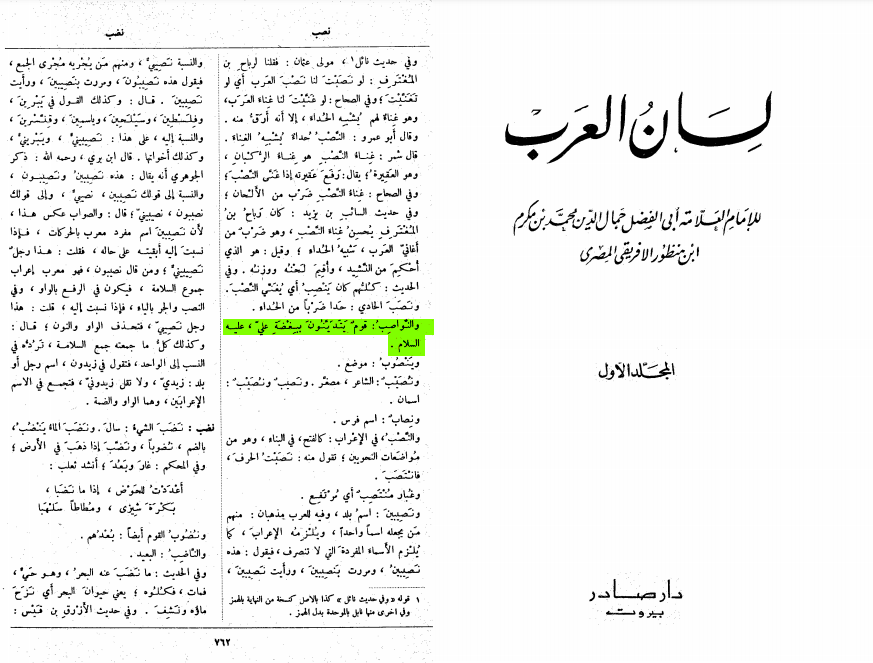
Ibn Manzur in Lisan al Arab:
Ibn Manzur states in In Lisan al Arab:
والنَّواصِبُ قومٌ يَتَدَيَّنُونَ ببِغْضَةِ عليّ عليه السلام
“Nawasib are those who embrace the hate of Ali (as) as part of their faith”
Uploaded on: 2026-01-10 16:00:03
Credit: mujtaba ali

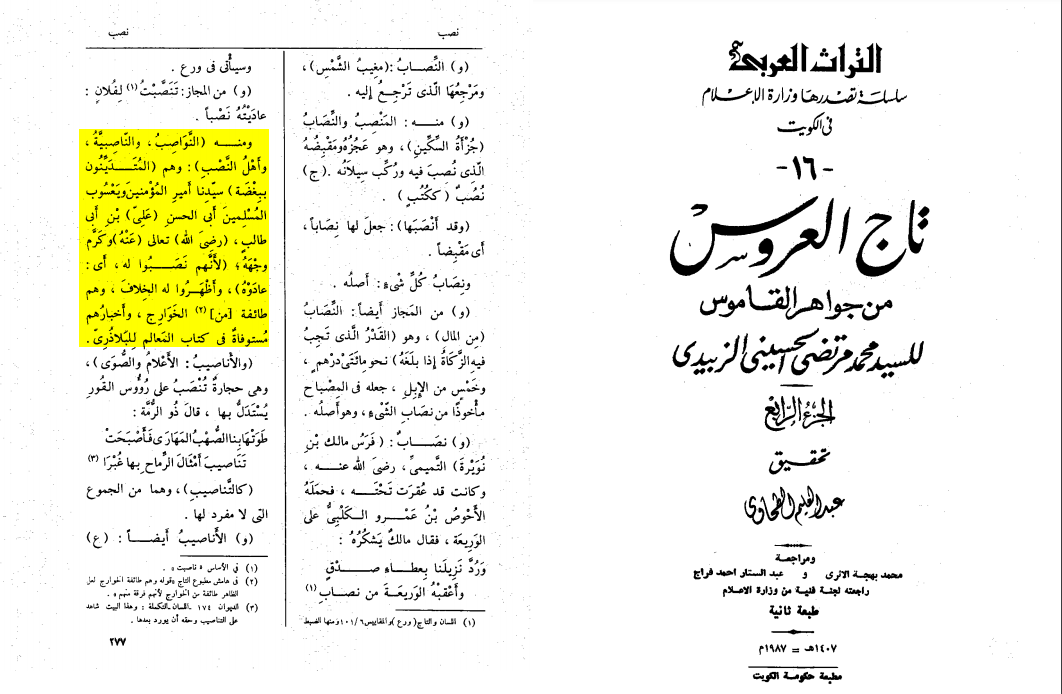
Taj al arus: النَّوَاصِبُ والنّاصِبيَّةُ وأَهْلُ النَّصْبِ : وهم المُتَدَيِّنُون بِبغْضَةِ سيّدِنا أَميرِ المُؤْمنينَ ويَعْسُوب المُسْلِمينَ أَبي الحسنِ عَلِيّ بْنِ أَبي طالبٍ رضِيَ الله تعالى عَنْهُ وكَرَّم وجْهَهُ
Nawasib: “Are those who hate the commander of believers and the leader of Muslims Abu al-Hassan Ali bin Abi Talib [ra]“.
Uploaded on: 2026-01-10 15:59:34
Credit: mujtaba ali

Jalaludin Suyutis definition of Nasibism:
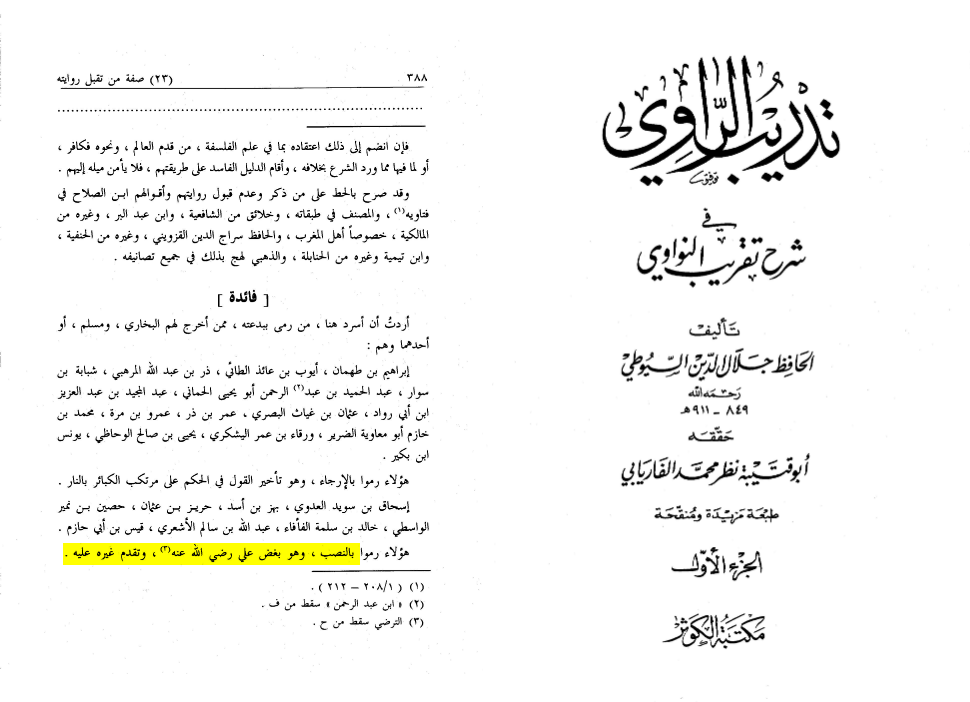
بالنصب وهو بغض علي رضي الله عنه وتقديم غيره
“Nasb is hating Ali [ra] preferring the others.”
Uploaded on: 2026-01-10 15:58:42
Credit: mujtaba ali