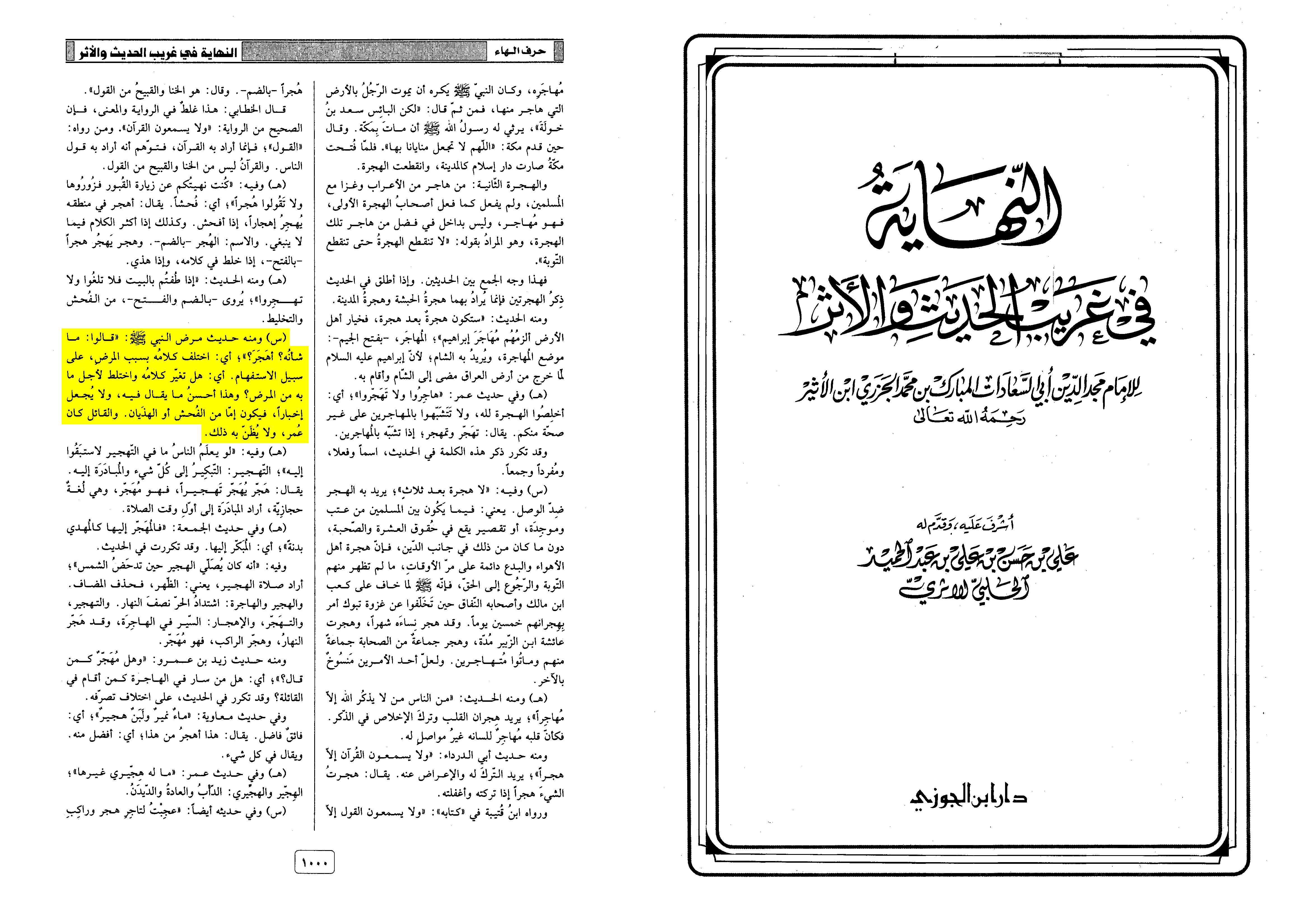
al-Nihayah fi Ghareeb al-Hadith wal Athar, by Ibn al-Athir, pg. 1000:
ومنه حديث مرض النبي ﷺ: قالوا: ما شأنه؟ أهجر؟، أي: اختلف كلامه بسبب المرض، على سبيل الاستفهام. أي: هل تغير كلامه واختلط لأجل ما به من المرض؟ وهذا أحسن ما يقال فيه، ولا يجعل إخباراً، فيكون إما من الفحش أو الهذيان. والقائل كان عمر، ولا يُظن به ذلك.
Among such reports is the hadith of the Prophet’s SAW illness: they said, “What is the matter with him? Is he delirious?”—that is, they questioned whether his speech had changed due to illness, in the form of a question. Meaning: Has his speech altered and become confused because of what he is suffering from? This is the best way to interpret it, and it should not be taken as a statement, for that would imply either rudeness or delirium—and it was ʿUmar who said it, and such a thing is not to be assumed of him.
Uploaded on: 2026-01-13 10:34:37
Credit: mujtaba ali

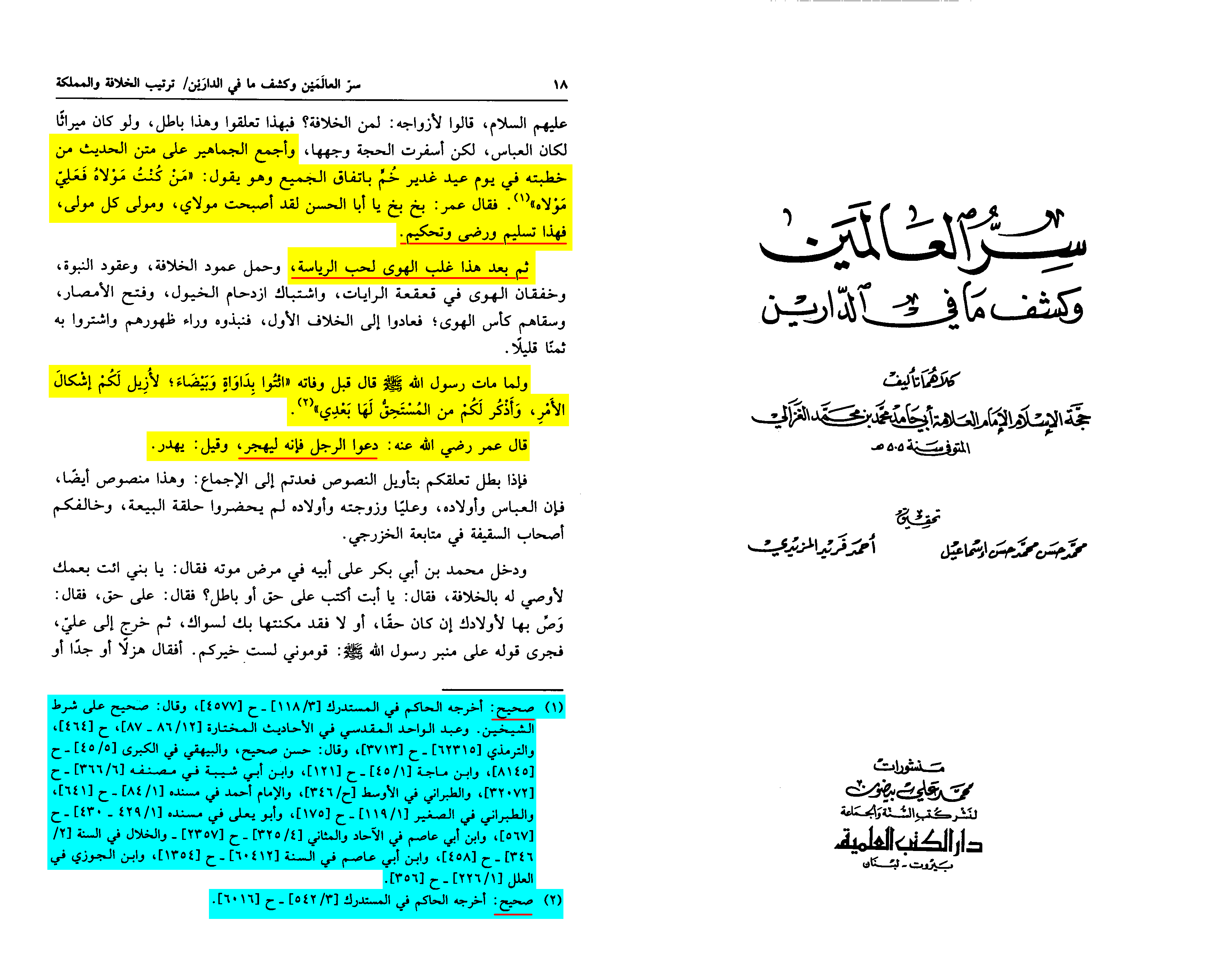
We read in Ghazali's Sirr al-'Alamin pg. 18:
وأجمع الجماهير على متن الحديث من خطبته في يوم غدير خم باتفاق الجميع وهو يقول : من كنت مولاه فعلي مولاه . فقال عمر : بخ بخ يا ابا الحسن لقد أصبحت مولاي ومولى كل مولى ، فهذا تسليم ورضىً وتحكيم ، ثم بعد هذا غلب الهوى لحب الرياسة... ولما مات رسول الله (ص) قال قبل وفاته : : ائتوا بدواة وبيضاء لأزيل لكم إشكال الأمر ، وأذكر لكم من المستحق بعدي قال عمر رضي الله عنه : دعوا الرجل فإنه ليهجر ، وقيل : يهدر
"The masses have unanimously agreed on the content of the hadith from his sermon on the Day of Ghadir Khumm, with everyone's agreement, when he said: 'Whomever I am his master, Ali is his master.'
'Umar then said, 'Congratulations, congratulations, O Abu al-Hasan! You have become my master and the master of every master.'
This was an acknowledgment, acceptance, and endorsement. However, after this, desire for leadership and authority prevailed...
When the Messenger of Allah (SAW) was about to die, he said: 'Bring me a pen and paper so I may remove any confusion about the matter and clarify who deserves [leadership] after me.'
'Umar said: 'Leave the man, for he is delirious,' or it was said: 'He is speaking nonsense.'
Uploaded on: 2026-01-13 10:34:03
Credit: mujtaba ali

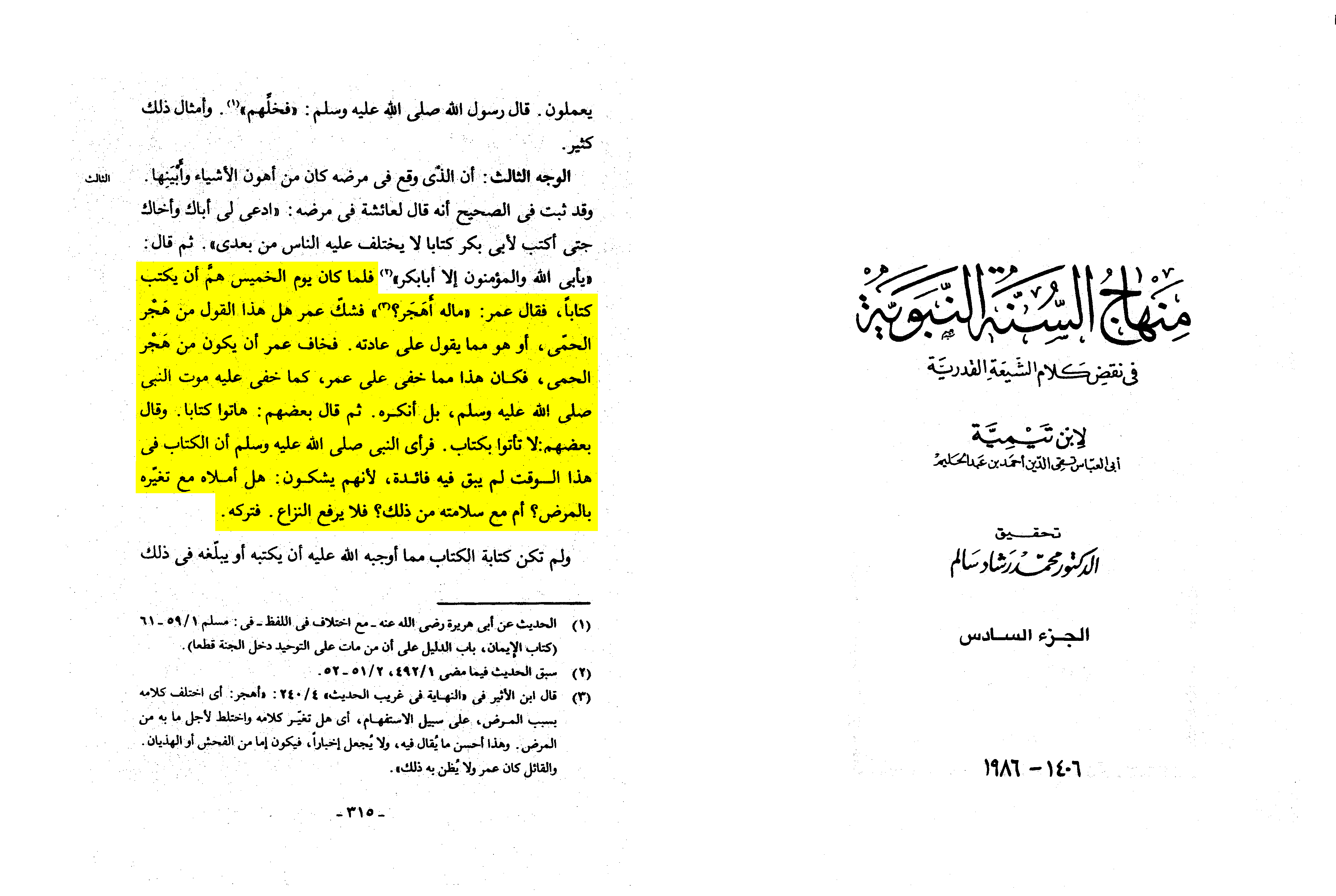
Minhaj Al-Sunnah Vol 6 pg 315
When Thursday came he intended to write a statement. Omar said, "What is the matter with him is he delirious?" Omar doubted whether this statement was due to fever-induced delirium or if it was something he would normally say. He feared it might be due to fever-induced delirium. This was hidden from Omar, just as the death of the Prophet, peace be upon him, was hidden from him. Rather, he denied it, then some of them said, "Bring a book." And some said, "Do not bring a book." The Prophet, peace be upon him, saw that at this time, a book would not be of any benefit, because they were questioning whether it was prone to change due to his illness or if it was safe from this. Thus, the dispute would not be resolved. So, he abandoned it.
Uploaded on: 2026-01-13 10:32:44
Credit: mujtaba ali