Description
Fath al-Bari by Ibn Hajar al-'Asqalani, Vol. 4, pg. 117 - 118:
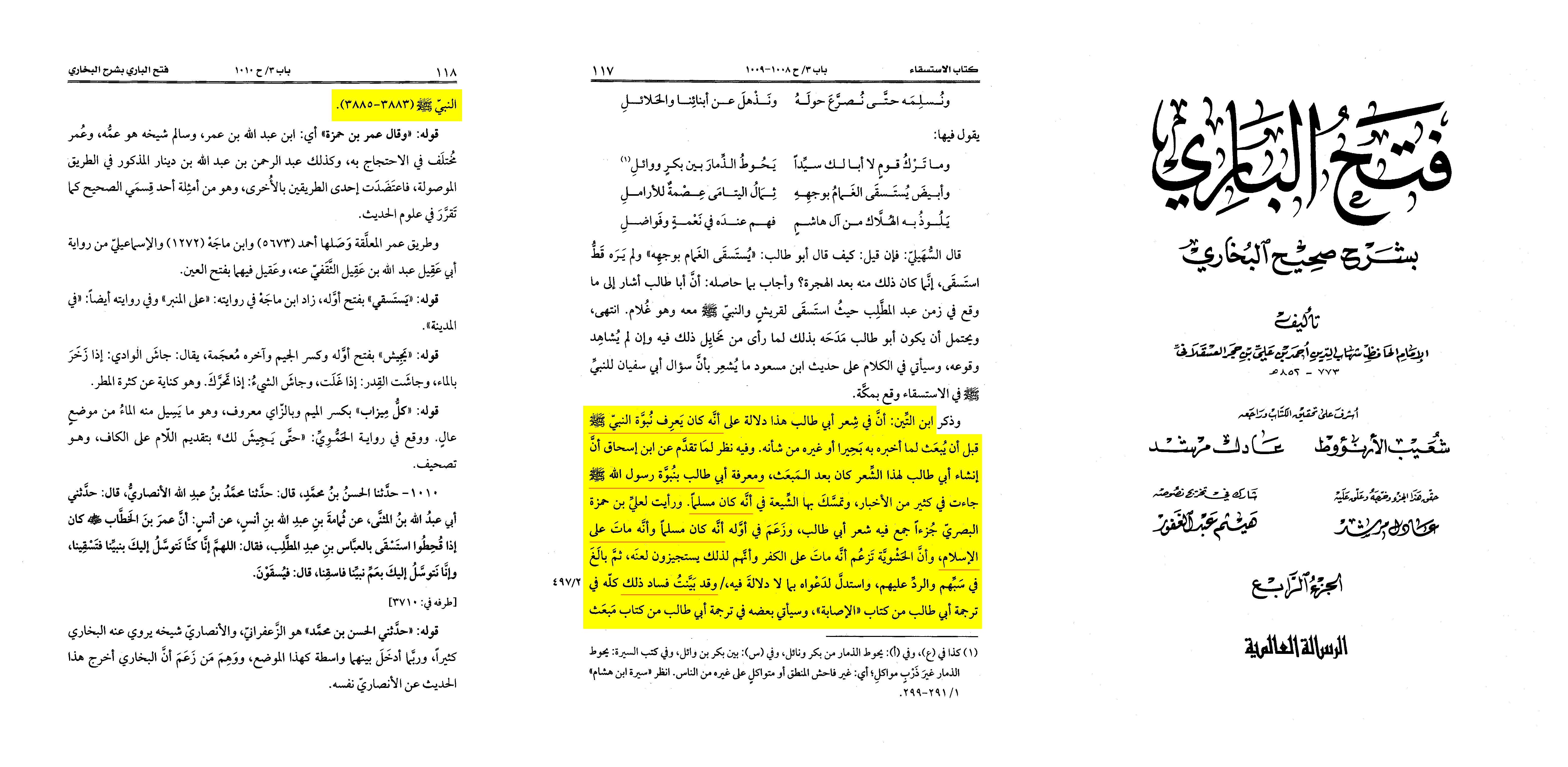
ابن التين أن في شعر أبي طالب هذا دلالة على أنه كان يعرف نبوة النبي صلى الله عليه وسلم قبل أن يبعث لما أخبره به بحيرا أو غيره من شأنه، وفيه نظر لما تقدم عن ابن إسحاق أن إنشاء أبي طالب لهذا الشعر كان بعد المبعث، ومعرفة أبي طالب بنبوة رسول الله صلى الله عليه وسلم جاءت في كثير من الأخبار، وتمسك بها الشيعة في أنه كان مسلما. ورأيت لعلي بن حمزة البصري جزءا جمع فيه شعر أبي طالب وزعم في أوله أنه كان مسلما وأنه مات على الإسلام وأن الحشوية تزعم أنه مات على الكفر وأنهم لذلك يستجيزون لعنه، ثم بالغ في سبهم والرد عليهم، واستدل لدعواه بما لا دلالة فيه وقد بينت فساد ذلك كله في ترجمة أبي طالب من كتاب الإصابة، وسيأتي بعضه في ترجمة أبي طالب من كتاب مبعث النبي
Ibn al-Tin said that in the poetry of Abu Talib there is evidence that he knew of the prophethood of the Prophet (peace be upon him) before he was sent, based on what was informed to him by Bahira or someone of his stature. There is a point to consider here regarding what was mentioned earlier from Ibn Ishaq, that Abu Talib composed this poetry after the Prophets mission had begun. Abu Talibs knowledge of the prophethood of the Messenger of Allah (peace be upon him) is mentioned in many reports, and the Shia rely on this to assert that he was a Muslim.
I also saw a work by Ali ibn Hamza al-Basri in which he collected Abu Talibs poetry and claimed at the beginning that he was a Muslim and died upon Islam. He noted that the Hashawiyya claim that he died in disbelief and, for that reason, justify cursing him. Then he went to great lengths to insult them and refute their claims, using arguments that have no real basis. I have already explained the invalidity of all of this in Abu Talibs biography in Al-Isabah, and some of it will also appear in the biography of Abu Talib in Mabath al-Nabi.
 Alkarbala